
Frequently Asked Questions About Kilimanjaro:
- How do you climb Kilimanjaro?
- Is climbing Kilimanjaro difficult?
- How many days does a Kilimanjaro climb take?
- What is the best time to climb Kilimanjaro?
- Kilimanjaro climbing equipment list
- What is the accommodation like on Kilimanjaro?
- What are the advantages of the Marangu Route?
- What do you eat during a Kilimanjaro climb?
- Can beginners climb Kilimanjaro?
- Is the summit night on Kilimanjaro difficult?
- How do you climb Kilimanjaro?
First Step to Climbing Kilimanjaro: Choosing the Right Route
Marangu Route (Easiest Route)
Takes 5–6 days, lodging in mountain huts, suitable for beginners
Kilimanjaro climbing programs are organized according to routes as 5-6, 6-7, 7-8, or 9 days.
Kilimanjaro climbing packages are created according to the routes.
Kilimanjaro tour prices are created according to the routes.
| ROUTE | DURATION | DIFFICULTY
|
| Machame Route | 5 days | Easy |
| Machame Route | 6–7 days | Moderate |
| Lemosho Route | 7-8 days | Moderate–Difficult |
| Northern Circuit | 9 days | Difficult but high success rate |
- Is climbing Kilimanjaro difficult?
Kilimanjaro, at 5,895 meters, is Africa’s highest mountain and one of the world’s largest free-standing peaks.
Climbing Kilimanjaro does not require technical mountaineering skills.
No ropes, ice axes, or mountaineering equipment are needed on a Kilimanjaro expedition.
The main difficulty in climbing mountains in Tanzania stems from the high altitude and weather conditions.
Kilimanjaro tours do not require technical climbing. Anyone can climb it.
The difficulty comes from the high altitude. Your Kilimanjaro climbing guide will help you prepare.
The climb can be made easier by choosing the right route and guide.
The success rate is high, especially with the Marangu Route.
The drop in oxygen above 5,000 meters can cause headaches, shortness of breath, and fatigue.
Solution: Climb slowly, drink plenty of water, and stay well hydrated.
Rainy seasons (April–May and November) make climbing more difficult
The dry season (January–March, June–October) is safer
- How many days does climbing Kilimanjaro take?
Kilimanjaro is Africa’s highest mountain (5,895 m) and one of the world’s largest free-standing peaks. It is the most popular mountain for climbing tours in Tanzania. The duration of a Kilimanjaro climb depends on the route. There are several routes to reach Uhuru Peak.
Easy route (Marangu) → 5 days
Moderate difficulty (Machame, Lemosho) → 6–8 days
Difficult route (Northern Circuit) → 9 days
Main factors affecting duration: Route, fitness level, weather, and acclimatization
- When is the best time to climb Kilimanjaro?
Kilimanjaro is Africa’s highest mountain (5,895 m) and one of the world’s largest free-standing peaks. The best months to climb Kilimanjaro. Kilimanjaro dry season, Kilimanjaro best climbing time
- January – March
Warm and sunny days
Low rainfall
Clear views of the summit and scenery
Popular, busy season
- June – October
Dry season
Clear and stable weather
Ideal time to reach the summit
- April – May and November
Rainy season, muddy trails, limited visibility
Climbing may be more difficult on some routes
Quieter season, fewer crowds
| Route
| Best time
| Notes
|
| Marangu
| January – March / June – October
| Easy and safe
|
| Machame
| June – October
| Moderate difficulty, dry season advantage
|
| Lemosho
| January – March / June – October
| Long route, ideal for summit views
|
| Northern Circuit
| June – October
| Longest and most comprehensive route, weather conditions critical
|
- Kilimanjaro climbing equipment list?
Although climbing Kilimanjaro does not require technical mountaineering (no ropes, ice axes, etc.), a well-prepared equipment list is essential due to variable weather conditions and high altitude.
The right equipment:
Protects you in both hot and very cold conditions
Ensures a comfortable sleep
Prevents water from freezing and supports hydration
Reduces the risk of injury (e.g., trekking poles reduce pressure on the knees)
A-Clothing / Clothing Layers:
| Layer
| What You Need
|
| Base Layer
| Polar fleece jacket or soft shell jacket Synthetic or down-insulated jacket (for summit night)
|
| Mid Layer / Insulation
| Waterproof, breathable rain jacket (with hood) Waterproof pants (preferably with side zippers)
|
| Outer Layer / Shell
| Trekking pantolonları (hafif, rahat) Polar pantolonlar (gece ve soğuk havalarda kullanım için) |
| Underwear & Socks
| Moisture- Moisture-wicking underwear (synthetic recommended over cotton) Thick wool or technical trekking socks (multiple pairs)
|
- B) Head, Hand, and Foot Protection
Hat/Cap: Wide-brimmed sun hat + wool/fleece beanie
Face Cover: Balaclava or Buff-style face mask (for wind and dust)
Gloves: Waterproof, insulated gloves + thin glove liner
Footwear: Waterproof, high-ankle trekking boots, pre-worn and broken in
Optional: Gaiters (for dust, snow, and wind)
- C) Camping and Sleeping Equipment
Sleeping bag: “Four-season” or cold-resistant type preferred (e.g., -10°C and below)
Sleeping mat: Inflatable or foam mat (for routes with camp stays)
Camp pillow (inflatable optional)
Large duffel bag with 70–90 L capacity (for items carried by porters)
30–35 L daypack (for shaving water, snacks, layers)
- D) Water and Hydration
Water bottles (at least 2–3 liters total capacity)
Hydration bladders (such as CamelBak) – some guides recommend 3 liters. An insulated sleeve or protective cover is recommended to prevent freezing in non-insulated bottles.
- E) Technical Equipment
Trekking poles (foldable, helps with balance and reduces strain on knees)
Headlamp (with spare batteries) – essential, especially for summit night
Waterproof bag(s) with necessary covers (dry bags)
- F) Eye Protection and Protective Gear
Sunglasses (UV protection)
Sunscreen with high SPF (essential protection)
Lip balm
- G) First Aid and Medical Equipment
Small first aid kit (painkillers, bandages, blister pads, etc.)
High altitude medication (e.g., Diamox) — consult your doctor
Hand sanitizer, toilet paper, wet wipes
Small toilet bottle (pee bottle) — recommended for nighttime and high altitudes
- H) Communication, Photography, and Small Accessories
Camera/phone + spare batteries
Charger and power bank (some camps may not have outlets)
Dry bags / waterproof bags (for organizing and protecting belongings)
Small towel (microfiber, quick-drying)
- I) Documents and Other Requirements
Passport, visa documents, insurance documents
Vaccination certificates / vaccination card, if required
Travel insurance documents
Spare cash
Options and Rental Information
Many climbing operators rent out some or all of the equipment. For example, items such as sleeping bags, trekking poles, and backpacks can be rented from local guides.
It may be more convenient to rent some equipment (especially non-technical, heavy clothing) rather than testing and carrying it beforehand.
- What is accommodation like on Kilimanjaro?
Accommodation Before Climbing Kilimanjaro
Accommodation before climbing Kilimanjaro is usually in the cities of Arusha or Moshi. These areas are both close to the airport and ideal for preparing for the climb.
Popular Hotels:
Green Mountain Hotel (Arusha)
Kibo Palace Hotel (Moshi)
Mount Meru Hotel (Arusha)
Accommodation During the Kilimanjaro Climb
Accommodation during the Kilimanjaro climb consists of mountain huts and campsites.
- A) Marangu Route (Hut Accommodation)
The most popular route, also known as the “Coca-Cola Route.”
Accommodation: Mandara Hut → Horombo Hut → Kibo Hut
Features: Beds and simple meal service, limited toilet and shower facilities.
- B) Other Routes (Lemosho, Machame, Rongai)
Tent Camping: Camping tents are used on the Lemosho and Machame routes.
Features: Portable toilets and campsite setup by guides and porters.
- What are the advantages of the Marangu Route?
Easy and Comfortable Route
The Marangu Route has less challenging and less steep trails compared to other routes.
It is ideal for those who want a fast climb or are climbing Kilimanjaro for the first time.
The Marangu Route uses mountain huts instead of campsites.
Bed and simple meal service are provided daily, eliminating the hassle of carrying tents.
This route typically takes 5 days and is a suitable option for those with limited time.
The Marangu Route is ideal for those who want to reach the summit in a short time.
The Marangu Route is safe due to heavy visitor traffic.
Guides and porters provide constant support.
You can see rainforest, moorland, and alpine desert landscapes at different stages of the route.
The Mawenzi and Kibo peaks offer unique photo opportunities.
- What do you eat on a Kilimanjaro climb?
- A) Mountain Huts
On routes that use huts, such as the Marangu Route, breakfast, lunch, and dinner are usually provided.
Sample menu: Soup, rice, pasta, vegetable dish, fresh fruit.
Hot drinks: Tea, coffee, and hot chocolate.
- B) At Campsites
On routes like Lemosho or Machame, meals are carried in tents and prepared by porters.
Light foods such as energy bars, nuts, instant soup, and chocolate are preferred.
- C) Energy and Fluid Intake During the Climb
Energy Bars and Snacks: Ideal for quick energy during trekking.
Fluid Intake: Water loss increases at high altitudes; you should drink at least 3 liters of water per day.
Electrolyte Supplements: Drinks containing potassium and magnesium prevent cramps.
- D) Special Diets on Kilimanjaro
It is important to inform the tour operator in advance if you require a vegetarian, vegan, or gluten-free diet.
Special diet menus are available on most routes, but advance booking is required.
- Can beginners climb Kilimanjaro?
Although Kilimanjaro is Africa’s highest peak, it does not require technical mountaineering skills. Therefore, beginners with no mountain experience can also climb it.
The climb is generally in the form of trekking.
No difficult technical climbing on rocky or icy terrain is required.
- A) Marangu Route
An easy and short route (5 days).
It offers accommodation in mountain huts, so there is no need to carry a tent.
Climbing at a slow pace helps you acclimatize to high altitudes.
- B) Rongai Route
A quieter and less crowded route.
Gently sloping trails, ideal for beginners.
- Is the Kilimanjaro summit night difficult?
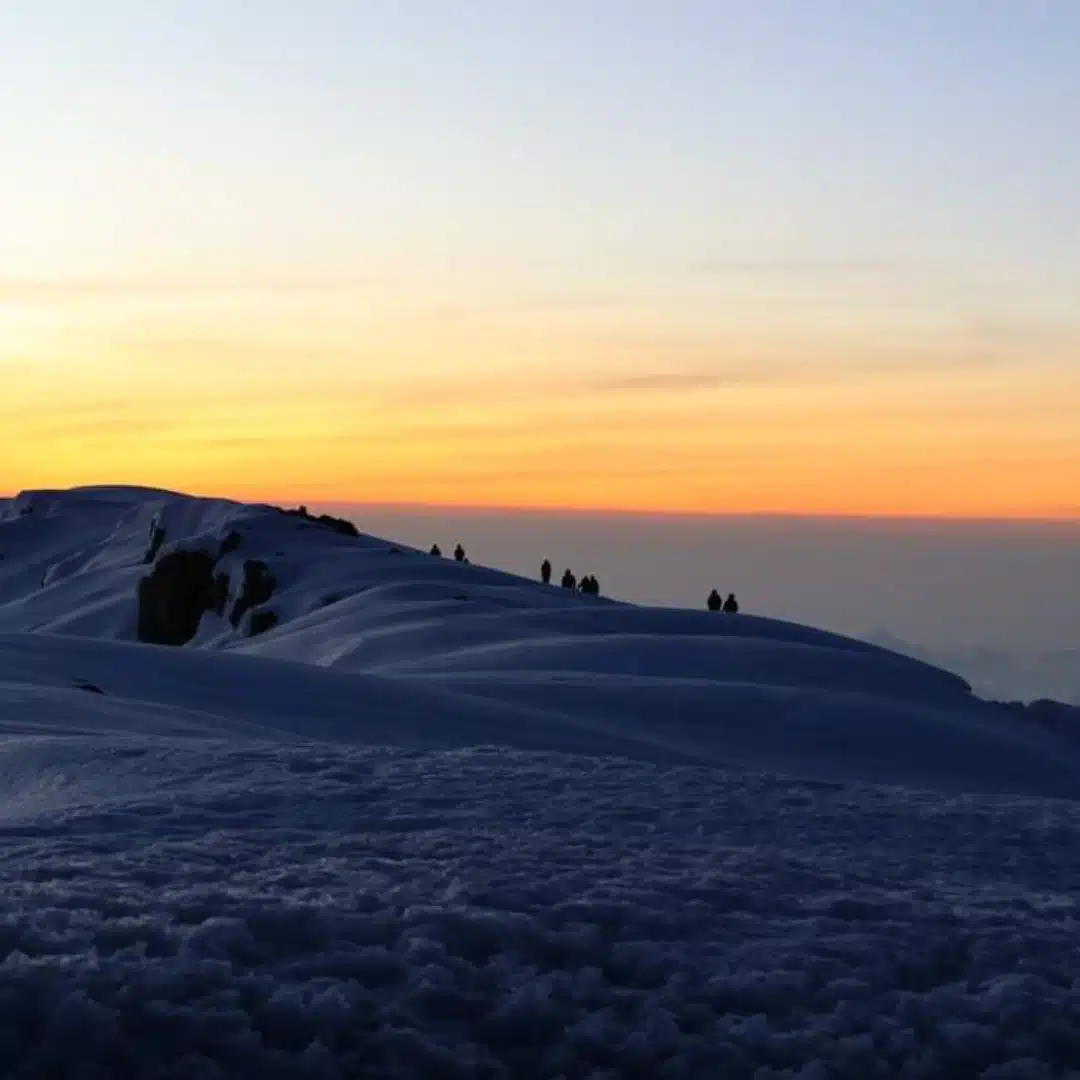
The summit night on Kilimanjaro refers to the midnight ascent from Kibo Hut to Uhuru Peak.
It usually starts around 11:00–12:00 p.m.
The goal is to reach the summit at sunrise.
The summit is 5,895 meters high; oxygen levels decrease.
The risk of Acute Mountain Sickness (AMS) increases.
Headaches, fatigue, and shortness of breath may occur.
The night can be very cold and windy.
Air temperatures can range from -10°C to -20°C.
It requires a steep and long hike lasting approximately 6–8 hours.
It is quite challenging for people with low energy levels.